



Acrylic gloss facades
30 January 2022
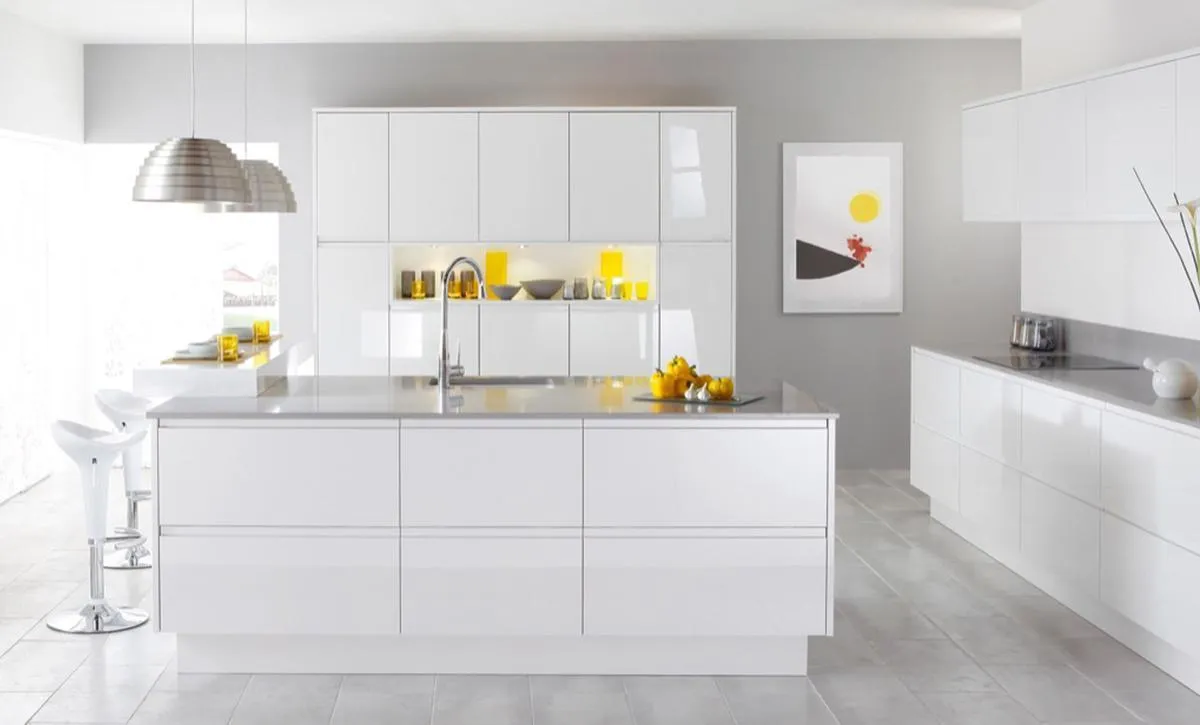
Acrylic facades — 18mm MDF base with multi-layer high-gloss acrylic lamination. Durable and modern.
Key Facts
- Acrylic sheet thicknessdimensions
- ~1 mm PMMA on base
- Base materialfeatures
- 18 mm MDF
- Gloss levelfeatures
- approx. 80-95 gloss units
- Surface propertyfeatures
- non-porous, does not absorb grease
- Drawbackother
- fingerprints and scratches show more
- Edge finishingfeatures
- laser edge-banding matters for durability
A high-gloss acrylic front is one of the most striking solutions for a modern kitchen — its mirror-like shine makes the space feel brighter and larger.
How is an acrylic front made?
An acrylic front is made by bonding a thin (typically ~1 mm) PMMA (acrylic) sheet onto an MDF base, creating a non-porous, mirror-like surface. The full front uses a standard board thickness. The result is a deep, uniform gloss — around 80-95 gloss units.
What are the advantages of an acrylic front?
A mirror-like, deep gloss and rich colors. The non-porous surface doesn't absorb grease — spills wipe off without marks. Quality, UV-stabilized acrylic resists fading well. It is ideal for a minimalist, modern style and especially effective in a small kitchen, where it reflects light.
What should you watch out for?
On a gloss surface, fingerprints and fine scratches show more than on matte — so frequent, gentle cleaning is needed. Edge quality (e.g. laser edge-banding) matters, as failure tends to start at the edges. Damaged acrylic is hard to repair locally and often needs panel replacement.
Acrylic vs lacquer (PU) vs gloss laminate
Acrylic is a factory PMMA sheet with the deepest, most uniform gloss. Polyurethane lacquer (PU) is spray-applied and its key advantage is repairability (it can be sanded and recoated). Gloss laminate is harder and cheaper, though its gloss is slightly less deep.
How to care for gloss fronts
Use only a soft microfibre cloth and a mild soapy solution; avoid abrasive sponges, powders and aggressive solvents that damage the shine.
Futurium and gloss fronts
For a modern gloss look we offer suitable fronts — Italian CLEAF and painted MDF in RAL/NCS colors. Our team at the showroom will help you choose.