



Smooth facade panels
30 January 2022
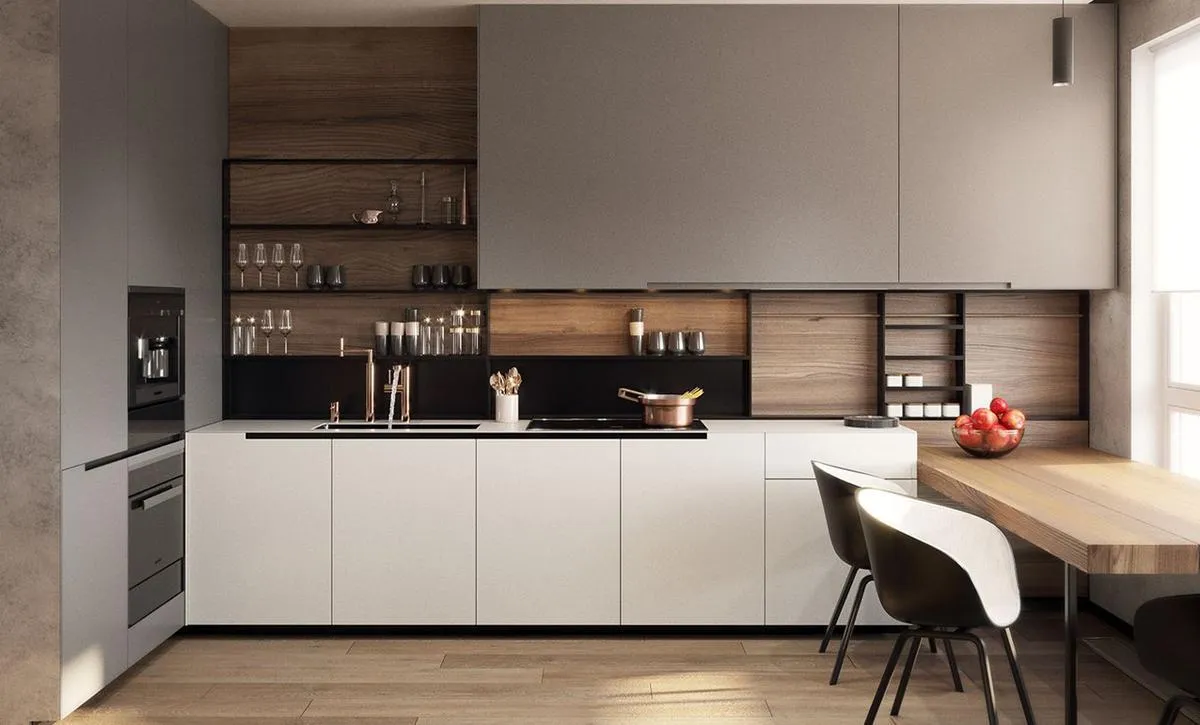
Smooth facade panels in 50+ colours — a soft natural look for the modern kitchen.
Key Facts
- Base materialfeatures
- MDF with a matte lacquer or melamine/laminate layer
- Standard thicknessdimensions
- About 18-19 mm
- Colour choicefeatures
- More than 50 colours
- Soft-touch / super-matte surfacefeatures
- Velvety anti-fingerprint layer (e.g. EGGER PerfectSense)
- Main advantagefeatures
- Fingerprints and fine scratches are less visible than on gloss
- Careother
- Soft cloth or microfibre with a neutral cleaner, no abrasives
A matte (smooth) front is one of the most in-demand choices for a modern kitchen — a refined, non-reflective surface that holds fewer fingerprints.
How is a matte front made?
A matte front is usually built on an MDF base with a matte lacquer or melamine/laminate layer; standard thickness is ~18-19 mm. Premium "super-matte / soft-touch" surfaces (e.g. EGGER PerfectSense) use a velvety, anti-fingerprint layer — a microscopic uneven texture scatters light, making the surface deeply matte and pleasant to touch.
What are the advantages of a matte front?
Fingerprints and fine scratches are less visible than on gloss. A refined, calm, modern look in any color; it scatters light softly, without glare. Some premium soft-touch surfaces "heal" superficial micro-scratches with gentle heat.
What should you watch out for?
On some matte surfaces, greasy marks can be noticeable if not wiped promptly — so regular, gentle cleaning is recommended.
Matte vs gloss — which to choose?
Gloss boosts brightness and the sense of space in a small/dark kitchen (at the cost of fingerprints). Matte is a calm, modern look that hides marks and suits a high-traffic family kitchen better.
How to care for matte fronts
A soft cloth or microfibre with a neutral cleaner; no abrasives.
Futurium and matte fronts
For a matte look we offer painted MDF in RAL/NCS colors and Italian CLEAF fronts. Our designer-constructor will help you choose the right option.