



Glass for facades
30 January 2022
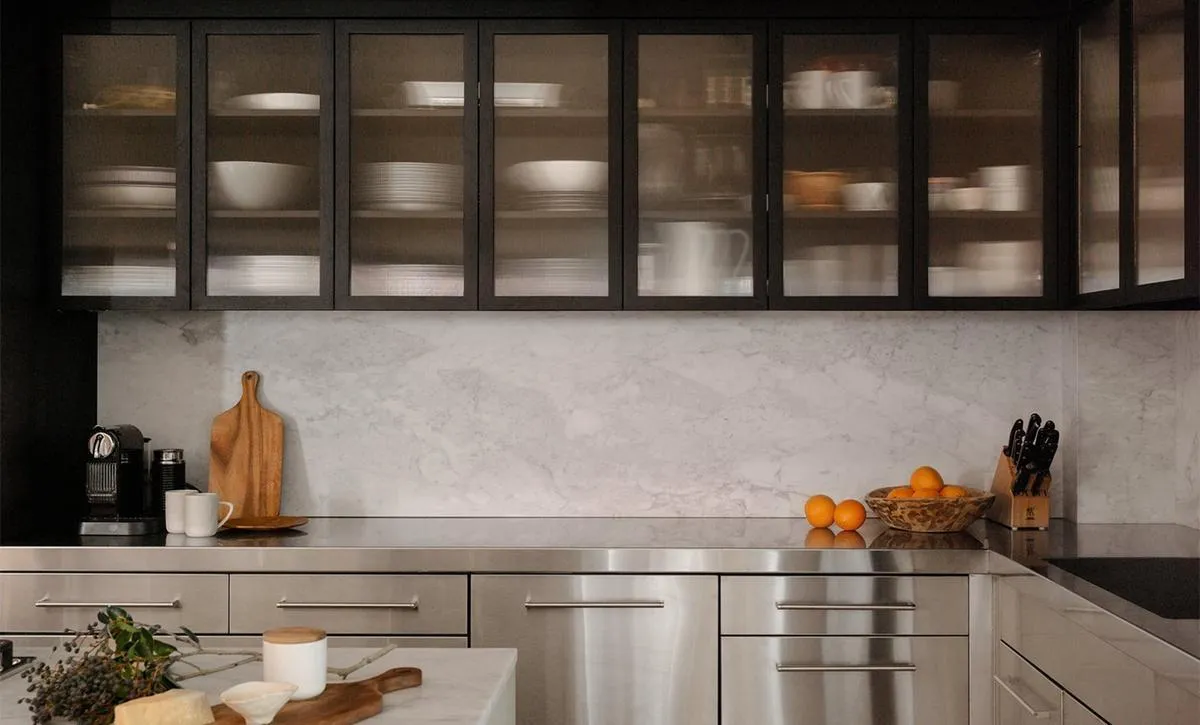
Glass types used in kitchen facades — transparent, frosted, tinted, with patterns.
Key Facts
- Glass front typesfeatures
- clear, frosted, tinted, back-painted
- Tempered glass strengthfeatures
- about 4-5x stronger than ordinary glass
- Break behaviorfeatures
- shatters into small, blunt granules, not sharp shards
- Frosted glass advantagefeatures
- hides the contents while passing light
- Back-painted glassfeatures
- resistant to scratches, moisture and fading
- Futurium offeringother
- aluminum-profile fronts with clear and frosted tempered glass
Glass in furniture fronts creates a sense of lightness and brightness. It is often used in kitchens, open cabinets and fronts set into aluminum profiles.
How is glass used in fronts?
Glass is set into an aluminum or other profile and used as part of a front or as a full front. Clear, frosted (sand- or acid-etched), tinted and back-painted (lacquered) glass options are available.
What are the advantages of a glass front?
It visually lightens the furniture and brightens the space. Frosted glass hides the contents while passing light. Back-painted glass is especially durable — resistant to scratches, moisture and fading, and easy to clean.
What to watch out for, and why glass is safe
Fingerprints show on clear glass; frosted is more practical here. For safety, fronts use tempered (toughened) glass — it is about 4-5× stronger than ordinary glass and, if broken, shatters into small, blunt granules rather than sharp shards.
How to care for glass fronts
Use glass cleaner and a soft cloth; avoid excess moisture at the profile joints.
Futurium and glass fronts
We offer aluminum-profile fronts with glass — in clear and frosted options, with tempered safety glass. Our designer-constructor will help you integrate glass fronts into your design.