



Kitchen Front Materials — Comparison and How to Choose
17 June 2026
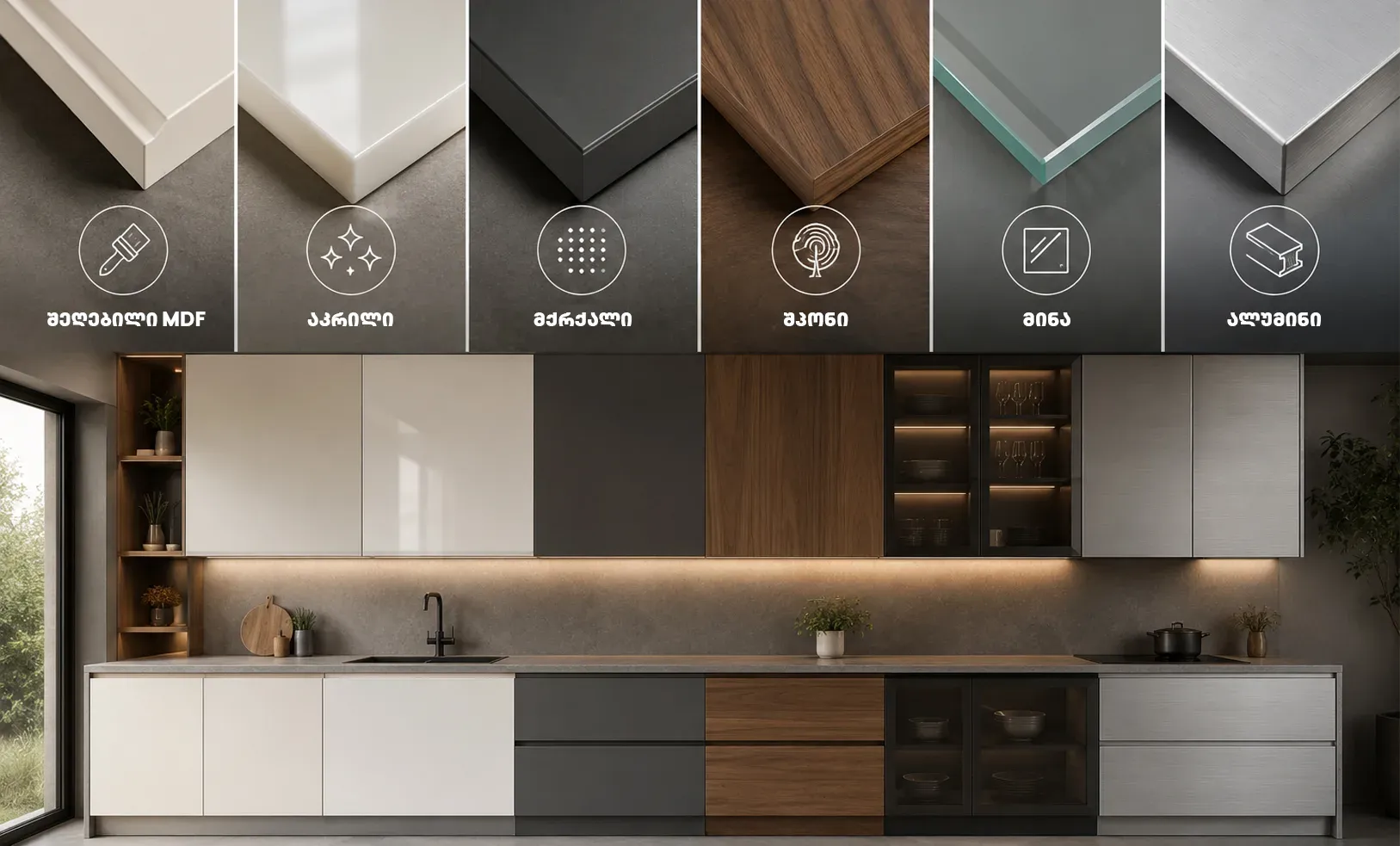
Painted MDF, acrylic, matte, veneer, glass and aluminum — comparing look, moisture resistance, care, repairability and what drives the price.
Key Facts
- Painted MDFfeatures
- Smooth front in any RAL/NCS color; edge sealing matters for moisture resistance
- Acrylic (gloss)features
- Mirror-like deep gloss; fingerprints highly visible, repaired by panel replacement
- Soft-touch / mattefeatures
- Refined non-reflective surface that hides fingerprints, partially repairable
- Laminated chipboardfeatures
- Wood/stone looks with wide decor, MR version is affordable, not repairable
- Veneer and solid woodfeatures
- Real wood texture; solid wood is unique and needs a stable climate
- Glass and aluminumfeatures
- Light, modern look with high moisture resistance, in an aluminum frame
- Cost driversprice
- Material type, decor/color, surface finish and repairability determine the front cost level
The front defines both the look of a kitchen and its cost. Below we compare the main materials so you can more easily choose the one that fits your style, budget and lifestyle.
Comparison of front materials
| Material | Look | Moisture resistance | Fingerprints | Repairability | Cost level |
|---|---|---|---|---|---|
| Painted MDF | Smooth, any RAL/NCS color | Medium (edge sealing matters) | Less on matte, more on gloss | Hard | Medium |
| Acrylic (gloss) | Mirror-like, deep gloss | Good | High (visible) | Hard (panel replacement) | Medium-high |
| Matte / soft-touch | Refined, non-reflective | Good | Low (hides them) | Partial (soft-touch) | Medium-high |
| Laminated chipboard | Wood/stone looks, wide decor | Good (MR version) | Low | Not repairable | Affordable |
| Veneer | Real wood texture | Medium | Low | Partial | Medium-high |
| Solid wood | Natural, unique | Medium (stable climate) | Low | Good (re-sand/coat) | High |
| Glass (in aluminum frame) | Light, modern | High | Higher on clear | — | Medium-high |
EGGER vs CLEAF — what's the difference?
Both are European, high-quality materials. EGGER (Austria, founded 1961) is a world leader in panels and melamine-faced boards, with 300+ decors and matching edging; ideal for carcasses. CLEAF (Italy) makes designer, synchronized (registered-embossed) textures that give a front a tactile, three-dimensional surface. Futurium uses EGGER for carcasses and CLEAF or painted MDF for fronts.
Carcass material: EGGER vs standard chipboard
The carcass (box) is loaded every day, so its quality matters. EGGER boards are tested to European standards (EN 14322/14323), have low emissions (E1) and a certified antibacterial surface — a more reliable, decor-rich choice than standard chipboard.
What determines the price of a kitchen?
The price is calculated individually and is affected by: the kitchen's size and configuration; the front material (acrylic/matte/veneer vs laminate); the hardware (e.g. Blum systems); built-in appliances; and extras (lighting, mechanisms). See indicative prices in the catalog; an exact quote is prepared after measurement.
How to choose?
If you want color freedom and classic profiles — painted MDF. Maximum shine — acrylic. A practical, fingerprint-hiding everyday kitchen — matte. A natural look — veneer or solid wood. Affordable and durable — laminated chipboard. Our designer-constructor at the showroom will help you choose.